Smart home for 1000, 2000 or 5000 EUR: what you get
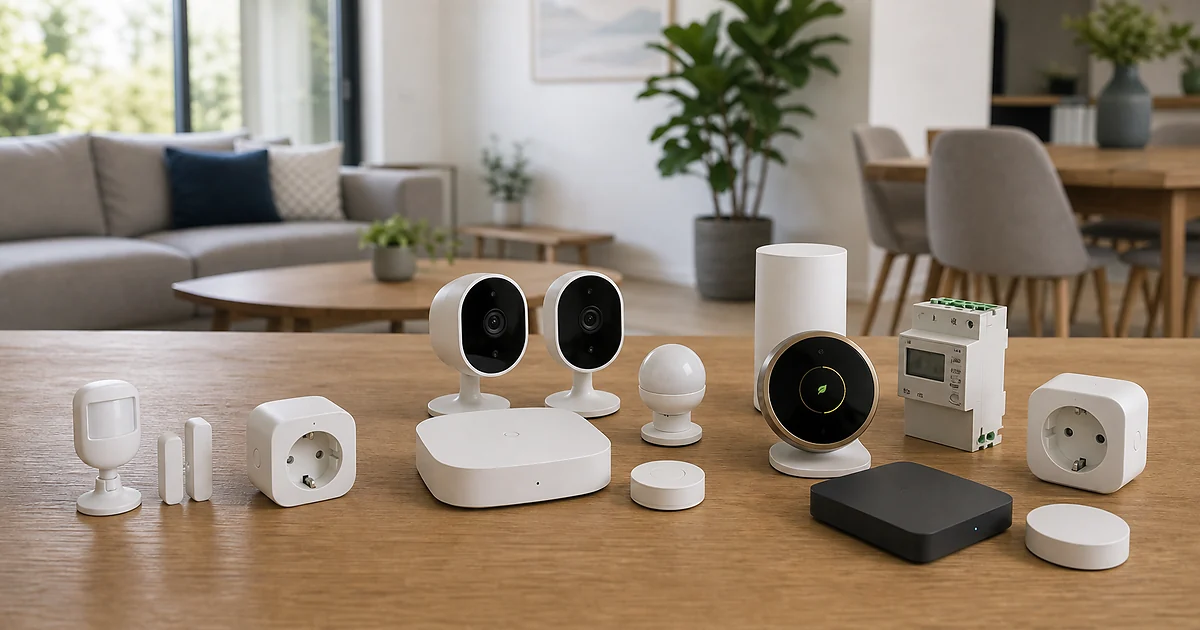
A smart home budget is best split by tasks. Up to 1,000 EUR covers basic security, around 2,000 EUR gets you a controller and scenarios, and at 5,000 EUR you already have a serious system.
Quick answer
If you want a fast decision, start with a scenario: what should happen when you leave, return, get up at night, detect water or want to lower the heating. Devices are chosen only after the scenario is clear.
What matters when choosing
For 1,000 EUR do not try to buy everything. It is better to take a water sensor, smoke sensor, a few lights and basic automation. At 2,000 EUR add a controller, video doorbell and more scenarios. At 5,000 EUR add heating, cameras, smart lock and zones.
A good smart home does not add work. It runs quietly in the background, does not send unnecessary notifications and does not require every family member to understand five apps. Fewer reliable scenarios are better than many random devices.
Local example and price
A family in Ljubljana starts with 2,000 EUR: controller, sensors, hallway light, video doorbell. Six months later they add heating and a smart lock. This development is healthier than buying random devices.
In Ljubljana a common starting point is an apartment without drilling, in Maribor it is houses with heating and a yard, and in Koper apartments, humidity and temporary access for guests.
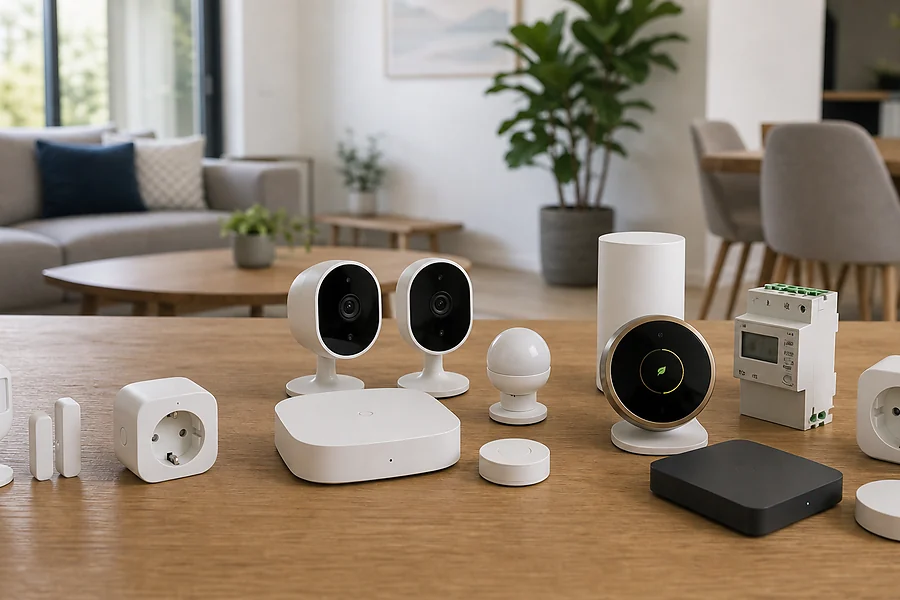
Indicative pricing: a basic kit of sensors and smart plugs starts at 150-400 EUR, a usable starter package with controller, sensors and a few scenarios is often 490-990 EUR, and a larger smart home with heating, lock, cameras and multiple zones is 2,000-5,000 EUR or more.
Prices are indicative and meant to speed up the decision before the site visit. For legal, subsidy or technical conditions, always check the current state before execution. In any offer it is useful to separate equipment, installation, app setup, additional licenses or subscriptions and future expansion. That way the client compares the whole result, not just the cheapest device.
When you compare two offers, compare the same line items: brand and equipment class, warranty, labour, materials, configuration, testing, post-installation support and future expansion. The cheapest offer is not necessarily bad, but it must be clear what is included and what will be charged extra.
Choice table and on-site visit
| Budget | What you get | For whom |
|---|---|---|
| 1,000 EUR | Sensors, lighting | Starters |
| 2,000 EUR | Controller, scenarios | Apartment / house |
| 5,000 EUR | Cameras, heating, lock | Full system |
| Phased | Expansion | Safest path |
- what should happen automatically
- which devices must work even without internet
- who will have access to the app
- whether Wi-Fi is stable in all rooms
- whether the system can be expanded without replacing all equipment
A site visit shows where the signal is weak, where there is no power, which devices need to work locally and who will use the system. This avoids a solution that is technically interesting but tiring in practice.
Related solutions and sources
For smart home packages see /packages, for connection with video surveillance /cameras, and for energy scenarios /solar. Related topic: First steps in a smart home: what to install first.
Frequently asked questions
How much does a smart home budget cost?
Basic systems can be a few hundred euros, a larger smart home several thousand. Price depends on the scenarios.
Does it work without internet?
Critical local scenarios should work without internet; remote notifications usually need internet.
Can I start with a small package?
Yes. It is best to start with security, lighting or heating and expand later.
What is the most common mistake?
Buying devices without verified compatibility and without a clear scenario.
When is a site visit needed?
When you want to connect multiple systems: heating, cameras, lock, sensors or solar.
Free on-site visit
For a smart home without unnecessary devices, book a free site visit: /contact.html.